By the time vomiting has gone on for a month, the question you are really asking is whether this is the food, an internal organ, or the gut itself. Those are the three places to look: what is going in, whether that is the food bowl or whatever gets picked up in the yard; an organ outside the digestive tract, such as the kidneys, liver, or thyroid; or disease in the stomach and intestines. From the outside all three can look the same, which is why testing, not more waiting, is what produces an answer. Vomiting is a symptom rather than a diagnosis, and it is normal for the cause to take more than one visit to pin down.
Palisades Veterinary Hospital in Fountain Hills works chronic vomiting in order: physical exam, lab work, and X-rays first, diet trials next, and a closer look inside when the picture is still unclear. Our ultrasound and endoscopy let us evaluate the liver, kidneys, and pancreas, then examine the lining of the stomach and intestines directly, with endoscopic biopsies to take tissue samples without major surgery. When the cause turns out to be kidney, liver, or thyroid disease, we manage it here through our AAHA-accredited internal medicine services. If cleanup has become a regular part of your week, give us a call and we will start narrowing it down.
The Most Important Things to Know About Chronic Vomiting
- Vomiting that keeps repeating over weeks isn't the same problem as a one-time upset stomach, and it rarely sorts itself out.
- The cause almost always sits in one of three places: what your pet is eating, an organ outside the digestive tract, or the gut lining itself.
- Testing moves in order, from blood work and imaging to a strict diet trial, with endoscopy and biopsy held for cases that stay unclear.
- Blood in the vomit, a swollen or painful belly, retching that brings nothing up, or an inability to hold down water needs a call right away.
What Is Your Pet's Vomit Telling You?
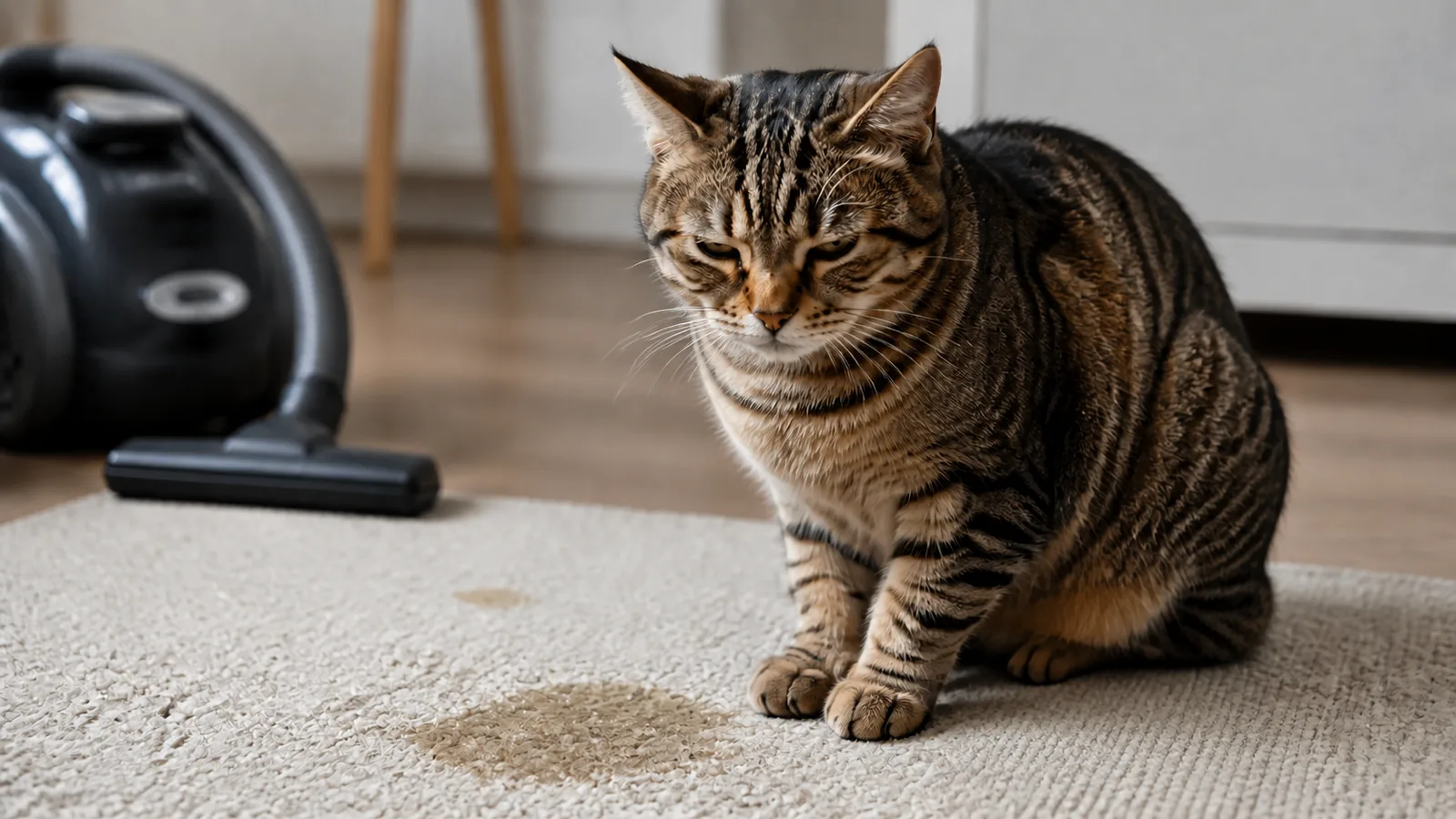
Timing, frequency, and what the mess looks like tell us more than any single episode does. Yellow or green foam usually means bile and an empty stomach, while food returning nearly whole within minutes of a meal tells a different story, which is why the appearance of vomit shortens the suspect list before any test is run. Snap a photo before you clean up, and note the time of day and how long after the meal it happened. It feels odd, we know, but a picture beats a description every time.
| What comes up | What it can point toward |
| Yellow or green foam | Reflux into an empty gut, classically before breakfast |
| Whole or barely digested food soon after eating | Fast eating, or regurgitation from the esophagus rather than true vomiting |
| Dark brown, coffee-ground material | Blood that's been digested somewhere in the upper gut |
| Bright red blood | Fresh bleeding, from the mouth, esophagus, or stomach lining |
| Clear or foamy white liquid | Saliva and gastric fluid, common with nausea between meals |
Regurgitation and vomiting look alike from across the room, but regurgitation is passive, with no heaving, and the food often comes up in a tube shape. That points toward the esophagus and conditions such as megaesophagus, and it changes where we look first.
When should you stop watching and make an appointment?
Once the pattern has repeated across two or three weeks, waiting longer rarely adds information. A cat who brings up one or two hairballs a year is normal, and a cat doing it every month is telling you that hair is not moving through the gut the way it should.
Book a visit sooner if you're also seeing:
- Weight coming off: you may feel it along the spine and hips before the scale shows much.
- More drinking and more urinating: extra trips outside or a heavier litter box both count.
- Lower energy: less interest in play, more sleeping, a dog who stops meeting you at the door.
- Diarrhea coming and going: loose stool alternating with normal stool alongside the vomiting.
Age raises the stakes. In pets past seven, kidney disease, liver changes, and thyroid disease often announce themselves as vomiting first, which is why senior blood work catches so many of them before anything else does.
When Is Vomiting an Emergency?
Vomit with blood in it, a swollen or painful belly, retching that brings nothing up, an inability to hold down water, and vomiting paired with collapse are the versions that can't wait for a scheduled appointment. Call us right away for any of these:
- Blood, fresh or digested: bright red streaks and dark coffee-ground material both mean bleeding in the upper GI tract.
- A distended or painful abdomen: a drum-tight belly, especially in a deep-chested dog, can signal a twisted stomach.
- Unproductive retching: heaving with nothing coming up is one of the most urgent signs in dogs.
- Nothing stays down, not even water: dehydration builds fast once fluids can't be kept in.
- Flat, weak, or barely responsive: severe lethargy with vomiting moves your pet to the front of the line.
- Very young or very old pets with other signs: puppies, kittens, and seniors have far less reserve to spend.
We handle emergency and urgent care during our open hours, so call us first if something looks wrong during the day. Once we've closed for the evening, go straight to a local emergency hospital instead of waiting for morning.
Where Does Chronic Vomiting Usually Come From?
Chronic vomiting is rarely one tidy problem. The cause tends to sit in one of three places: what your pet is eating or swallowing, an organ outside the gut creating nausea, or disease in the stomach and intestinal wall itself, and separating them is the entire point of the workup.
- What your pet is eating or swallowing: a food allergy is an immune reaction to a specific protein while an intolerance is a digestive problem, so pet food selection matters and switching brands every few weeks only resets the clock. Then there's everything that never came from a bowl, and partial GI obstructions from fabric, string, or the chewed-off corner of a plush toy often produce weeks of on-and-off vomiting instead of the sudden crisis pet families picture.
- An organ outside the digestive tract: chronic kidney disease is one of the most common reasons an older cat starts vomiting, and liver and gall bladder disease, hyperthyroidism, and pancreatitis all cause nausea from different directions. Anti-nausea medication helps your pet feel better while we sort this out, but lasting improvement comes from managing the organ behind it, which is what internal medicine care for kidney, liver, and thyroid disease is built around.
- Disease in the gut itself: inflammatory bowel disease happens when inflammatory cells crowd into the lining of the stomach and intestines, and it can only be confirmed on tissue. Intestinal lymphoma, gastric ulcers, bilious vomiting syndrome, pyloric stenosis, and gastric cancer round out the list, and they're worth telling apart because the treatments have almost nothing in common.
Here's the honest part. This can take more than one visit, because blood values shift, a diet trial takes weeks, and sometimes the second round of testing is the one that answers the question. The veterinarians you'll see here have worked plenty of cases that took three steps to crack, so please don't give up at step one.
| Condition | What's happening | Clue that points toward it |
| Inflammatory bowel disease | Immune cells infiltrate the gut lining | Long-running vomiting, weight loss, intermittent diarrhea |
| Intestinal lymphoma | Cancer of immune cells in the intestinal wall | Older cats especially; mimics IBD until tissue is examined |
| Gastric ulcers | Erosions in the stomach lining | Coffee-ground vomit, appetite loss, sometimes an NSAID history |
| Bilious vomiting syndrome | Bile refluxes into a stomach left empty too long | Yellow foam in the early morning, eased by a bedtime snack |
| Pyloric stenosis | The stomach outflow is too narrow | Food vomited hours after a meal, often in young or flat-faced dogs |
| Gastric cancer | A mass growing in the stomach wall | Older pets, steady weight loss, vomiting that keeps worsening |
Telling these apart takes both halves of the story: what the diagnostics show, and what you've noticed at home about timing, appetite, and how your pet has seemed over the past few months.
Could the Problem Be How Your Pet Eats, or How They Feel?
Speed-eating and stress both get overlooked constantly, because neither one shows up on a blood panel.
- Eating too fast: scarf and barf is exactly what it sounds like, with food reappearing nearly whole a few minutes after the bowl empties, and it's common in multi-pet households where meals feel like a race. Slow bowls and interactive feeders stretch a thirty-second meal into a five-minute one, which is often the entire fix.
- Stress: cats especially, where a move, a new baby, a long houseguest, or quiet tension with another cat can unsettle digestion for weeks. Lip licking, pacing, hiding, and a suddenly picky appetite are early signals of fear, anxiety, and stress in dogs, and the same nervous system driving those behaviors also unsettles the gut.
Because both look identical to the medical kind from the outside, these are conclusions we reach after testing, not instead of it.
What Testing Comes First for a Vomiting Pet?
The workup begins with your story and a hands-on exam, then broadens to baseline testing of the whole body rather than just the digestive tract. Our in-house bloodwork, urinalysis, and fecal testing check organ function, red and white cell counts, hydration, thyroid levels, and intestinal parasites, several of which drive chronic vomiting all on their own. X-rays show organ size and shape, gas patterns, and some swallowed objects, and adding barium can outline a narrowing or a partial blockage a plain film misses. Abdominal ultrasound measures the thickness of the intestinal wall and shows the texture of the pancreas, liver, and the lymph nodes around the gut.
This is also where a yearly wellness screening earns its keep. A kidney value that reads mildly high means one thing on its own and something very different when we can watch it climb from last year's number.
What Does an Elimination Diet Trial Involve?
When baseline testing comes back clean, food moves to the top of the list. A diet trial only answers the question when it runs eight to twelve weeks on one food and nothing else, meaning no treats, no flavored medications, and no sampling from the other pet's bowl. We'll choose either a novel protein new to your pet's bowl, rabbit, venison, and duck are common picks, or a hydrolyzed diet whose protein is split into pieces the immune system can't recognize.
Over-the-counter limited ingredient bags sound like they'd do the same job, but they're produced on shared equipment and routinely test positive for proteins that never appear on the label. The hardest part is usually the household, not the pet. One well-meaning bite of cheese wrapped around a pill restarts the clock, so tell everyone before day one, including the neighbor who hands out biscuits over the fence.
When Is Endoscopy or Surgery the Right Next Step?
When testing and a strict food trial haven't produced an answer, the next move is looking at the gut lining directly and taking tissue.
- Endoscopy, without an incision: endoscopy passes a flexible camera into the stomach and upper small intestine under anesthesia, which allows a direct look at the lining and small tissue samples, and most pets go home the same day. We perform this here rather than shipping your pet across the Valley, and our AAHA-accredited anesthesia and monitoring standards mean pre-procedure testing, a plan matched to your individual pet, and someone watching the monitors from start to finish.
- Exploratory surgery, for deeper tissue: a full-thickness gastrointestinal biopsy samples every layer of the intestinal wall and allows a look at the liver, pancreas, and lymph nodes at the same time. It's the better choice when imaging flags something a scope can't reach, or when a mass or obstruction needs removing anyway, and we do that abdominal surgery in our own surgical suite.
Tissue is the only thing that reliably separates IBD from intestinal lymphoma, and those two can look nearly identical on ultrasound, on blood work, and across the exam room table. One condition calls for a diet change and immune-modulating medication, another for chemotherapy, so knowing which one you're facing is what turns treatment into something targeted rather than a series of educated guesses.
How Does Treatment Change Once the Cause Is Named?
Treatment follows the diagnosis, and we map out the best plan for your pet based on what the workup found and a conversation with you. Food-responsive vomiting is the best outcome on this list, because the fix is already in the bowl, and the work is keeping it there through holidays, travel, and recipes that get quietly reformulated. IBD usually takes a combination of anti-inflammatory or immunosuppressive medication and a therapeutic diet, with doses adjusted by how your pet is progressing rather than a fixed calendar. Systemic disease shifts the focus off the stomach entirely, and managing kidney function, thyroid levels, or liver health tends to bring a real drop in nausea as your pet starts feeling better overall.
Chronic Vomiting Questions Pet Families Ask Us Most
How often is too often for a cat to vomit?
Once a month is already more than we'd like to see, and once a week is a pattern worth investigating. The old idea that cats just vomit sometimes has aged badly, because a healthy cat eating a food that agrees with them shouldn't bring anything up on a regular basis. Frequency tells us more than volume does, so jot the dates on a calendar for a few weeks before your appointment. That simple record often reveals a rhythm nobody noticed in the moment.
Can I just switch foods and see if that helps?
You can, though it rarely produces a usable answer. Casual switching changes many ingredients at once, so if things improve you won't know which one mattered, and if the vomiting continues you can't tell whether food was innocent or the attempt just wasn't strict enough. A structured trial using one carefully chosen diet, run long enough to mean something, gives you information you can build on. Bring the labels of whatever you've already tried.
Is anesthesia safe for a pet who's already sick?
That's a fair worry, and it's the question we hear most before a scope. Blood work, a physical exam, and a blood pressure check come first so we know exactly what we're working with, and the anesthetic protocol is built around your pet's own findings rather than a standard recipe. For most pets with weeks of unexplained vomiting, leaving the cause unidentified carries more risk than a closely monitored procedure.
You Don't Have to Figure This Out on Your Own
Cleaning up at five in the morning and wondering whether today is the day something is truly wrong wears on you in a way that's hard to explain to anyone who hasn't lived it. It's also a solvable kind of tired, and working the steps in order is what turns a months-long mystery into a diagnosis and a plan you can follow.
If your pet has been vomiting for weeks, book a visit with us at Palisades Veterinary Hospital in Fountain Hills and we'll start at the beginning. If you're not sure yet whether what you're seeing warrants an appointment, reach out and ask. That's a call we're always glad to take.