Your pet's allergic reaction may well fade on its own, but a mild one and a serious one look much the same early on, and the difference shows in what happens next. Hives after a sting or a new food may be gone by evening. They may also spread, bring swelling around the muzzle and throat, or tip into anaphylaxis, a whole-body reaction that drops blood pressure and makes breathing hard within minutes. At the slower end, the itching, licking, and ear trouble that return every season, or never fully leave, are an allergy too, and waiting on those only gives the skin more time to break down.
Deciding whether to wait or act is the hardest part, and Palisades Veterinary Hospital in Fountain Hills would rather help you make that choice than leave you guessing. Call us with what you are seeing and when it started, and we will tell you whether your pet can be watched at home, should be seen today, or needs to come straight in for emergency care, which our AAHA-accredited hospital handles in-house whenever we are open, Monday through Saturday. If swelling, vomiting, collapse, or labored breathing starts after we have closed, head to the nearest 24-hour emergency hospital rather than waiting for us to open. For the slow kind, the itch that keeps coming back, request an appointment and we will work out whether pollen, food, or fleas are behind it and get ahead of the next flare.
Hives, Itch, and When to Move Fast
- Hives, facial swelling, and sudden vomiting or collapse after a sting, a new food, or an injection are the fast-moving reactions, and the last group is a true emergency.
- Chronic itching, paw licking, repeat ear infections, and thinning fur are allergies too, and they get harder to control the longer they run untreated.
- Dogs and cats wear their allergies differently. The cat quietly overgrooming their belly is just as allergic as the dog chewing their feet raw.
- Allergies are controlled rather than cured, and a plan aimed at the trigger beats chasing one flare at a time.
What's Happening Inside a Pet During an Allergic Reaction?
An allergic reaction starts when the immune system misreads something harmless, a pollen grain or a bee's venom, as a threat and floods the tissues with histamine. Where that flood lands decides everything: skin alone means itching and welts, while blood vessels and airways mean an emergency. Most pets react to one of a short list of triggers, and plenty react to more than one.
| Trigger | What you usually see | How we pin it down |
| Pollen, grass, mold, dust mites | Paws, ears, belly, and armpits that won't stop itching | Exam, ruling out food and parasites, allergy testing |
| Food proteins | Itch that runs all year, sometimes with soft stool | A strict elimination diet trial |
| Fleas and biting insects | Crusty, itchy skin along the lower back and tail base | Flea check plus a trial of prevention |
| Bee and wasp stings | A puffy face or welts inside minutes | History, timing, and how quickly signs advance |
| Vaccines and medications | Trouble in the hours after a dose | Timing against the dose and any past reaction |
Atopic dermatitis is the itch-first skin disease driven by pollen, grass, mold, and dust mites, and it usually starts seasonal and creeps toward year-round. Fountain Hills doesn't follow the textbook calendar: mesquite, olive, and bermuda grass keep counts up for long stretches, and desert dust is a year-round fact of life. Two dogs with identical red feet can be reacting to different things, and testing settles what guessing can't.
Can a Pet be Allergic to Vaccines or Medications?
A nap and a sore spot at the injection site are the usual cost of a vaccine visit. Facial swelling, hives, vomiting, or collapse in the first few hours are the vaccination reactions that earn a phone call instead of a watch-and-wait evening. Medications do the same thing, and antibiotics, flea products, and pain relievers all turn up on that list. Tell us about any past reaction before your pet gets anything new, and we'll review it at every wellness and preventive care visit.
Is This an Emergency, or Can It Wait Until Morning?
Repeat itching and ear trouble get an appointment. Hives or a puffy muzzle get seen today. Collapse or labored breathing after an exposure gets a doctor this minute.
| How urgent | What you're seeing | Your next move |
| Now | Sudden weakness or collapse, breathing that's labored or open-mouthed, swelling creeping toward the throat | Come straight in during our open hours, or go to the nearest 24-hour emergency hospital if we're closed |
| Today | Welts, a puffed-up muzzle, a fresh sting, itching that came on hard and fast | Phone us and describe what's happening and when it began |
| This week | Scratching, licking, head shaking, or skin and ear infections on repeat | Book an appointment, because these don't clear up without help |
While someone drives, your job is information: note when the signs started and anything new your pet ate, chewed, or met outside, and grab the packaging if it's easy. Healthy gums are moist and pink, close to the color of the inside of your own lip, and pale or bluish gums mean the reaction is affecting blood flow or oxygen delivery. Call ahead so we know what's coming and have what we need ready.
A few well-meant first moves make things worse.
- Never give human combination antihistamines: the nighttime, sinus, and "-D" versions add decongestants, acetaminophen, or alcohol, all dangerous for dogs and cats.
- Skip human pain relievers, and don't induce vomiting: ibuprofen damages the canine gut and kidneys, acetaminophen is potentially fatal to a cat at a single household dose, and vomiting does nothing for an allergic reaction while risking aspiration.
- Don't wait out swelling near the muzzle or throat: airway swelling doesn't hold still, and breathing that looks fine now can change fast.
Are Hives or a Bee Sting Something to Worry About?
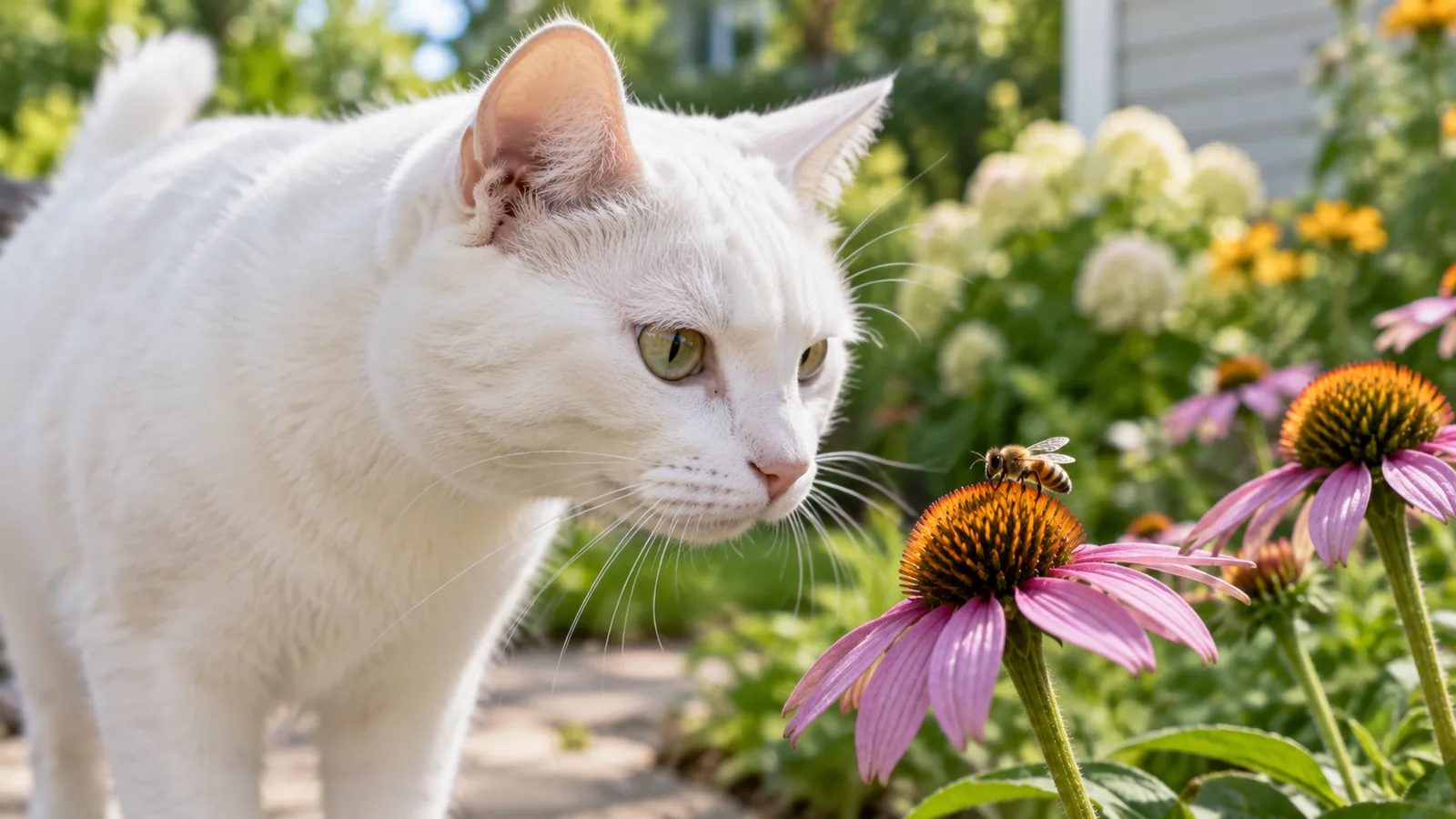
Hives are raised welts that show up within minutes to hours of an exposure, and most settle with treatment. The welts themselves rarely do harm. What matters is whether they come alone. Hives with swelling, vomiting, or any change in breathing become an emergency run instead of a same-day visit. On a short-coated dog they look stippled with coins, and under a thick double coat you may feel them before you see them. Most stings amount to a puffy muzzle. They turn urgent when the sting lands on the face or in the mouth, when there are several at once, or when anything beyond local swelling begins.
Coughing that looks like a hairball attempt, wheezing, or a crouched posture with the neck stretched out can be feline asthma, and an allergen-triggered airway flare can move from noisy breathing to a true crisis in hours. Dogs get allergic bronchitis too, usually a dry hacking cough that worsens on dusty days. Chest radiographs separate an airway problem from a heart problem, and we take those here.
What Does Anaphylaxis Look Like in Dogs and Cats?
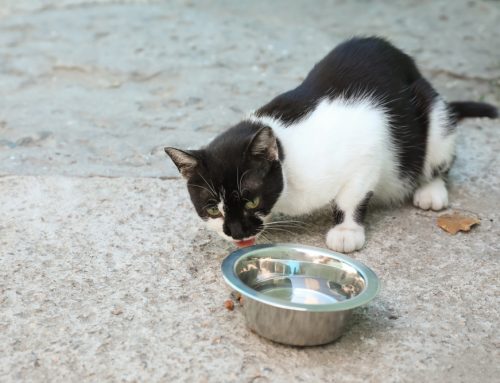
Anaphylaxis is the reaction that goes systemic, and blood pressure can drop within minutes. Anaphylaxis in dogs shows up first in the gut: vomiting, diarrhea, weakness, then collapse after a sting or a shot, and it is easy to write off as an upset stomach when it is really shock. Cats take it in the chest. Open-mouth breathing is never normal in a cat, and a cat sitting with their elbows out, breathing hard and refusing to move, is in serious trouble even when nothing else looks wrong.
Stings, injections, and medications cause most cases, and signs usually begin within minutes, though some patients take an hour or more. Come straight in for emergency and urgent care rather than watching to see whether it improves, or head to the nearest 24-hour emergency hospital once we've closed.
Why Won't My Dog Stop Licking, and Why Is My Cat Losing Fur?
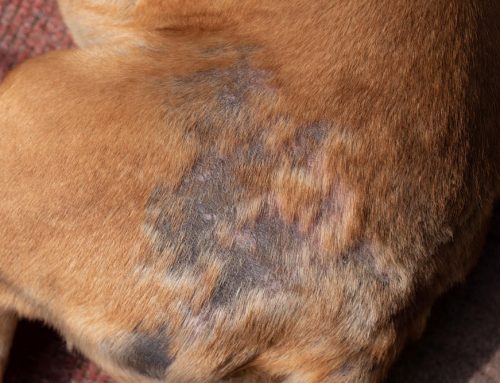
Chronic allergies land on the skin, and each species has its own tell. Dogs chew their feet, rub their faces, and collect ear infections. Cats groom the itch away out of sight, and the first clue is usually a thin strip of fur down the belly rather than any scratching you witnessed.
- The dog map: feet, face, ears, armpits, and belly. Licking between the toes leaves rust-colored saliva staining and puffy, tender skin that picks up infection easily because the area stays damp. A dog who licks one itchy patch raw can turn it into a hot spot overnight. The red, waxy, head-shaking ear infection that responds to drops and then comes back two months later is usually an allergy problem, not a cleaning problem.
- The cat patterns: symmetrical hair loss down the belly, inner thighs, or flanks, with short broken hairs instead of bald patches. Miliary dermatitis, small crusty bumps most families feel along the back long before they see them. Firm raised sores on the lip or chin, or on the belly and the backs of the thighs, are the signature of eosinophilic granuloma complex, allergy showing up as skin lesions instead of visible scratching.
What Happens Once Your Pet Reaches Us?
The plan follows the reaction. A crisis gets fast drugs and close monitoring. Chronic allergic skin disease gets a layered plan.
- In an emergency: epinephrine goes first, because it reverses the cascade rather than blunting it. An IV catheter follows for fluids and blood pressure support, oxygen goes on when breathing is compromised, and antihistamines and corticosteroids quiet what's left. Monitoring continues well past the point of looking recovered, since some patients have a biphasic reaction hours after the first wave resolves.
- For chronic allergies: first we treat secondary infections, then tackle the itch, and then find the allergic trigger. Treating an allergic pet without skin or ear cytology is guesswork, since yeast, cocci, and rod-shaped bacteria each need a different medication and frequently share one ear or hotspot. Skin and ear samples go to our in-house laboratory, and the answer comes back during the same visit. Ringworm and mange testing might also come along with the cytology, since both mimic allergic itch closely enough to send a plan in the wrong direction. Clearing the infection makes a pet dramatically more comfortable within days, but that infection was a symptom, and stopping there means it returns next season a little worse.
What Keeps Allergy Flares Under Control at Home?
Daily management does more for an allergic pet than any single prescription, and most pets need all four of these levers pulling together.
- Flea prevention, which isn't optional for an itchy pet: one bite can keep a sensitized pet itching for weeks, and flea allergy dermatitis needs no visible infestation to make an already-allergic dog or cat miserable. Allergies stack. A single extra trigger can tip a managed patient into a full flare. We'll help you pick flea and tick prevention that covers every animal in the household year-round.
- Medicated baths, sprays, and wipes: topicals are the most underused tool in allergy care and the reason many pets get by on less medication. Leave medicated shampoo on for at least 10 minutes before rinsing, timer running. Sprays, mousses, wipes, and routine ear cleaning cover the spots that flare first: facial folds, feet, armpits, and the tail base. Our veterinarians will match the product to the problem instead of sending you to the shampoo aisle to guess.
- Prescription options for itch: Apoquel, Numelvi, and Zenrelia are JAK inhibitors and can quiet itch within hours. Atopica, the brand name for cyclosporine, works more broadly and takes several weeks. Cytopoint, an injection every four to eight weeks, blocks one itch signal and suits dogs with established atopic dermatitis. Corticosteroids fit a short flare, not a long plan. Antihistamines help some patients and do little for others.
- Grooming, the house, and fatty acids: brushing pulls allergens out of the coat before they're licked off, and a wipe of feet, face, and belly when your pet comes in from outside does the same in half a minute. Launder bedding often in hot water, run a HEPA filter where your pet sleeps, and keep outdoor time shorter on windy afternoons. A couple of months on Omega-3 fatty acids thickens the skin barrier, and a tougher barrier needs less medication to hold the line.
Is There a Way to Make the Allergy Go Away for Good?
Allergies are controlled, not cured, and anything marketed as a cure is selling something. Some stubborn cases have something else layered underneath, like a hormone imbalance or an immune condition, and internal medicine workups rule those out first.
- Testing and immunotherapy for environmental allergies: A veterinary dermatologist does intradermal skin testing. We make the referral and coordinate it. Serum allergy testing runs on a blood sample we draw here. The results from the testing help us find the triggers to create immunotherapy, the one treatment aimed at the cause rather than the symptoms. A formula built from your pet's own allergens goes in as sublingual drops at home or a series of small injections. Retraining the immune response takes 12 to 18 months, but up to 80% of patients end up with meaningfully fewer symptoms.
- Diet trials for suspected food allergy: a food allergy is confirmed by removing the food, not by testing blood. An elimination diet trial run strictly for eight to twelve weeks on a novel or hydrolyzed protein diet, with a reintroduction challenge at the end, is still the only reliable way to confirm one. Novel means a protein your pet has never eaten. Hydrolyzed means the protein has been chopped so fine that the immune system can no longer pick it out. Both come as prescription diets because over-the-counter limited-ingredient foods routinely test positive for proteins that never appear on the label. One flavored chew, one crumb of cheese wrapped around a pill, and the clock starts over.
Questions We Hear About Pet Allergies
Is it okay to reach for the Benadryl in the cabinet?
Plain diphenhydramine has a role in mild reactions, but call for the dose before you open the bottle. Dosing is weight-based, and most cabinet tablets are sized for adults. Skip anything labeled as a combination product. The decongestants and pain relievers mixed into those can poison a dog and kill a cat. An antihistamine will not stop anaphylaxis, and it is never a substitute for coming in.
Will my puppy or kitten outgrow this?
Most allergic dogs begin showing signs between six months and three years old. A young dog with itchy ears and pink feet is more likely growing into the problem than out of it, and kittens follow a similar timeline. Early, consistent management keeps skin from cycling through infection after infection, and patients who start treatment young often need less medication later.
My pet had a mild reaction last time. Will the next one be worse?
A mild reaction doesn't guarantee a mild next one. Reactions don't escalate on a predictable ladder. A dog who got hives from a sting once might get hives again, or might have a much larger response. Prior reaction history is one of the most useful things you can tell us, and we note it in the record, where it guides every future vaccine or medication decision.
What to Do Next If Your Pet Is Itchy or Swelling
If the reaction is happening right now, that's a phone call and a drive, not a wait-and-see evening. If the itch has been dragging on for months, that's an appointment and a plan. Chasing one flare at a time wears families out while the skin gets worse underneath. Instead, schedule a visit at Palisades Veterinary Hospital here in Fountain Hills, and let's figure out what your pet is reacting to.