You usually cannot judge a daycare’s safety from the lobby or a few photos online. The things that actually keep dogs safe live behind the scenes: attentive supervision, dogs grouped by size and temperament, vaccination rules that are genuinely enforced, and staff who tell you the truth when a day did not go perfectly. The quality gap between facilities is wide, and a confident walk-through during play hours is your best tool for seeing past the marketing.
At Palisades Veterinary Hospital in Fountain Hills, our preventative medicine and vaccination services cover the core and lifestyle vaccines nearly every daycare requires, and a complete vaccine record is the one entry requirement entirely within your control. We are happy to help you think through which other policies are reasonable and why. To get your dog’s records current before a first drop-off, call us and we will get you sorted.
Evaluating a Daycare at a Glance
- Safety is mostly invisible from the lobby: supervision, grouping, and enforced vaccine rules are what matter, and you confirm them by asking.
- The tour is your best tool: what you watch on the floor tells you more than any brochure.
- Not every dog is a daycare dog: some thrive in a calmer boarding setting instead.
- The check continues after pickup: a quick once-over catches the minor injuries and early illness even good facilities produce.
What Separates a Safe Daycare From a Risky One?
A safe daycare is defined by how it operates when no one is watching, not by how clean the front desk looks. The substance shows up in a handful of operational habits that a quality facility can describe without hesitation, and a risky one cannot.
- Attentive supervision by trained staff who read early stress signals and step in before trouble escalates, with a staff-to-dog ratio of roughly 1:10 or better in active play groups.
- Thoughtful grouping by size, temperament, and play style, so a small dog is never loose in an active large-dog group and a nervous dog is not paired with a bulldozer.
- Built-in rest periods rather than hours of nonstop high-arousal play, which is where most fights and injuries come from.
- Quick, skilled responses to a dog who is hiding, freezing, or being targeted by another dog.
- Honest communication about how the day actually went, including the parts that were not perfect.
- Written protocols for vaccines, illness exclusion, and emergencies.
Structured socialization builds the confidence that lets a dog interact calmly with strangers and unfamiliar dogs, but the operative word is structured. A wide-open free-for-all teaches the wrong lessons and often produces anxious dogs. A pre-daycare wellness check confirms your dog is physically and behaviorally ready before the first trial day.
What Should You Watch For on a Facility Tour?
Ask to tour during peak play hours rather than at quiet opening time, and treat what you see as data. The contrast between a well-managed room and a chaotic one is usually obvious once you know what each signal means.
| What you see | What it signals | Read |
| Calm, supervised play with staff on the floor | Active management | Green flag |
| Dogs grouped by size and energy level | Thoughtful matching | Green flag |
| Clean, dry floors and quiet rest crates | Hygiene and rest built in | Green flag |
| “Our vaccine rules are usually flexible” | Weak health enforcement | Red flag |
| Widely different sizes mixed in one group | Injury risk | Red flag |
| Staff who cannot explain their grouping criteria | No real system | Red flag |
A facility that answers specific questions confidently is meaningfully different from one that gets vague or defensive when you press for details.
How Do You Read the Play on the Floor?
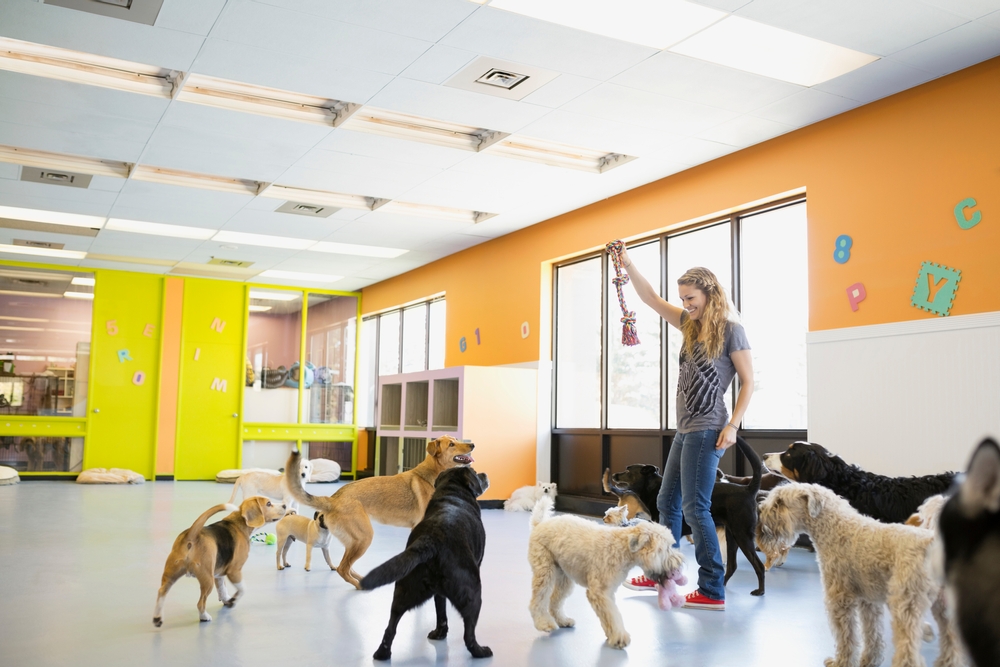
Healthy group play has a rhythm rather than constant frantic motion, so a few minutes of watching tells you whether the energy in the room is genuinely managed. The goal is not zero conflict ever; it is a space where problems are prevented early and handled calmly when they surface.
Signs of healthy, well-managed play:
- Dogs taking turns chasing and being chased
- Frequent self-interruptions for sniffing, water, and brief separations
- Play bows and loose, wiggly body language
- Staff actively present and scanning, not clustered and chatting
- A baseline of relaxed energy, not wall-to-wall arousal
Safe group play and careful introductions mean temperament testing and trial days before a new dog joins an established group. Learning to read body language yourself helps you interpret what your own dog is telling you about the experience afterward.
Is Group Daycare Right for Your Dog?
Daycare is not the right answer for every dog, and that is completely fine. A dog’s tolerance for busy group settings varies and shifts over time as they age, develop pain, or have a bad experience. The job is to match the setting to the dog rather than force the dog into the setting.
Signs daycare is a good fit:
- Comes home tired but content and settles within an hour
- No new injuries or lingering stress signs
- Holds weight, appetite, and normal home behavior
- Seems eager to go most of the time
Signs it is time to reassess:
- Comes home wired and unable to settle for hours
- Hides or refuses to leave the car at drop-off
- Recurring scratches, bite marks, or paw problems
- New reactivity, sleep changes, or appetite shifts at home
When Boarding Is a Better Fit
For dogs who prefer quiet, need individual attention, or have medical needs that make group play risky, supervised boarding is the safer choice. Pets with chronic illness, daily medications, or a recent surgery usually do meaningfully better in a calm boarding environment than on a daycare’s group floor. Boarding at Palisades includes spacious, air-conditioned indoor runs with an enclosed outdoor play area to burn off energy. Every dog gets several walks a day, and you can rest easy knowing that our experienced team is there for any medical issues that might pop up during their stay.
Why Is a Vetted Daycare Safer Than the Dog Park?
A well-run daycare and a public dog park may look similar from the outside, but operate in an entirely different manner. The difference comes down to who is screened on the way in and who is watching once the gate closes.
- Screening: daycares require vaccines, temperament evaluations, and a behavioral history, while the dog park requires nothing.
- Supervision: daycare staff watch constantly, while park owners are often on their phones or unable to control their own dog.
- Accountability: a daycare has policies, insurance, and a reputation to protect; the texting owner at the park has none.
- Grouping: daycares match dogs by size and play style, while the park puts everyone in one space.
Dog parks can still work for some dogs in narrow circumstances, like small parks at off-peak hours with familiar regulars, but for most owners a vetted daycare is the safer environment.
When Can a Puppy Start Daycare?
A puppy should not enter general daycare until the core vaccine series is complete, because a developing immune system and a crowded group are a risky combination. Some facilities run dedicated puppy groups with stricter health rules that can be appropriate later in the series. The harder tension is timing this against the socialization window.
The critical socialization window closes early, around 14 to 16 weeks, and puppy socialization research shows the developmental cost of waiting for the full vaccine series outweighs the disease risk of structured early exposure. Safer options during the vaccination period:
- Structured puppy classes that require vaccines of every participant, the safest route to early socialization
- Controlled introductions with healthy, vaccinated adult dogs in trusted homes
- Carrying your puppy through public spaces for sights and sounds without ground contact
Skip dog parks, public pet-store floors, and areas where stray or unknown dogs frequent until the series is done. Then a quality daycare with a real puppy group becomes a reasonable next step.
Which Vaccines and Health Records Should a Daycare Require?
A daycare that takes health seriously requires proof of vaccination and turns dogs away when records are incomplete, because the under-vaccinated dog is the risk to everyone in the building. Typical requirements:
- Rabies, legally and universally required
- DHPP for distemper, hepatitis, parainfluenza, and parvo
- Bordetella, standard for group settings
- Influenza, increasingly required where outbreaks have occurred
- Leptospirosis, common in regions with wildlife exposure
Year-round flea, tick, and heartworm prevention is non-negotiable, along with periodic fecal testing for intestinal parasites that spread even when stools look normal. Group settings raise exposure no matter how clean the floors are. The viral and bacterial concerns:
- Parvovirus and leptospirosis: still serious if vaccination has lapsed.
- Kennel cough and canine influenza: respiratory diseases that move fast through close contact.
- Oral papilloma virus: causes harmless warts in young dogs after mouth-to-mouth play.
Skin and gut conditions move through the same close contact and shared surfaces:
- Giardia: an intestinal parasite that spreads through contaminated water.
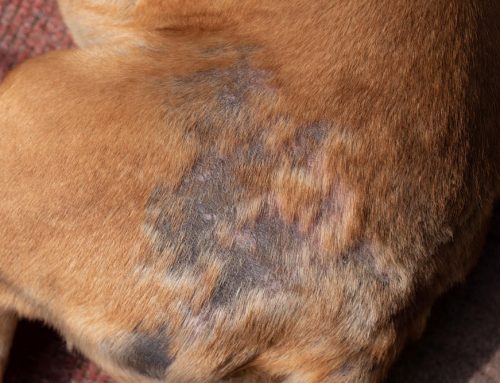
- Ringworm: a fungal skin infection passed by direct contact.
- Sarcoptic mange: itchy and highly contagious between dogs.
Most facilities enforce a symptom-free period of 24 to 48 hours before a dog returns after illness, and that rule is worth respecting rather than pushing against. If post-daycare illness develops, our advanced diagnostics and in-house laboratory support a fast answer.
What Should You Check After Every Pickup?
Even a well-run daycare produces the occasional bump or scrape, so a 60-second once-over at pickup is the habit that catches problems early. Run through the same short checklist every time.
- Paws for cuts, swelling, or a broken nail
- Eyes for redness or discharge
- Skin under the fur for bite wounds or scrapes that hide easily
- Demeanor for any shift from your dog’s normal
Puncture wounds deserve extra attention even when they look minor, because they drive bacteria deep into tissue and can abscess within 24 to 48 hours. Any swelling, tenderness, or discharge afterward warrants prompt evaluation through our emergency services, available during our regular hours.
Frequently Asked Questions About Daycare Safety
How Do I Know If My Dog Actually Enjoys Daycare?
Watch the hours after pickup. A dog who enjoys it comes home pleasantly tired, settles within an hour, eats normally, and is themselves all evening. A dog who is struggling comes home anxious, restless, or shut down, and may show appetite or sleep changes. Trust the pattern over time rather than a single good or bad day.
Should My Puppy Go to Daycare?
Not general daycare until the vaccine series is complete. Structured puppy classes during the socialization window are the safer alternative in the meantime. Once vaccines are finished, a quality daycare with an appropriate puppy group can be a good next step.
Can My Senior Dog Still Benefit From Daycare?
Sometimes, but it depends on the individual dog. Seniors with arthritis, vision or hearing loss, or low energy often do better with shorter visits, calmer groups, or supervised boarding than with active group play. A wellness exam helps clarify what suits your specific older dog.
What If My Dog Gets Sick After Daycare?
Some exposure comes with any group setting. Mild signs like a slight cough or brief GI upset that clears within 24 hours usually need only monitoring. Persistent vomiting, lethargy, fever, a hard cough, or eye and skin issues warrant prompt evaluation, and mentioning that your dog attends daycare helps us narrow the cause faster.
Choosing a Daycare With Confidence
A safe daycare protects health, supervises play, enforces vaccines, and takes rest seriously, and you confirm all four by touring during play hours and asking specific questions. The veterinary side of that partnership is keeping vaccines current, evaluating temperament, and preparing the records that protect your dog and every other dog in the room. When daycare is not the right fit, boarding your dog in Fountain Hills is a safe and comfortable alternative.
If you want help preparing for a daycare evaluation, updating vaccines, or weighing daycare against boarding, request an appointment or contact us and we will work through it together.